
A couple of weeks ago, one of my clients mentioned that they were using AI to help conduct their pipeline reviews.
I thought that was an interesting application because it addressed an issue faced by organisations across every tier of the channel – vendors, distributors and MSPs/solution providers. It also prompted me to explore what other practical AI use cases were already emerging.
That exercise highlighted just how differently people interpret the phrase “using AI”. I realised that most applications fall into one of three phases:
- Content Creation: Using AI to write emails, social media posts, proposals, newsletter articles and presentations.
- Automation: Using AI to complete tasks such as preparing quotes, managing renewals and responding to support requests.
- Decision Intelligence: Using AI to identify patterns, anticipate problems and help people make better decisions.
It is that third phase that I find the most fascinating. With that in mind, here are my 10 favourite AI use cases for the channel.
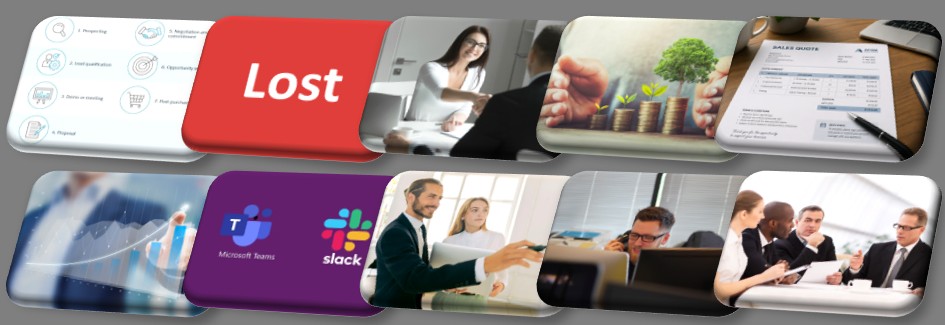
1. Pipeline Reviews
Pipeline reviews often rely heavily on the salesperson’s assessment of an opportunity. Unfortunately, salespeople sometimes have “happy ears” and hear what they want to hear. Some companies are now using AI to analyse CRM data alongside emails, call transcripts, proposals, meeting notes and sales history, giving managers a more objective assessment of deal risk, forecast confidence and which opportunities genuinely require their attention.
2. Loss Reviews
Most CRM systems contain fairly nondescript explanations for lost business, such as “lost on price” or “customer chose a competitor”. A far more revealing picture emerges when AI examines meeting notes, calendar entries, call transcripts, emails, and information about the competition. It uncovers why deals are really being lost and identifies possible recurring patterns in customer behaviour and/or salesperson behaviour. This can help with messaging and competitive positioning, or training and coaching to improve future sales performance.
3. Partner Engagement
By the time a partner’s revenue declines, the relationship may already have been deteriorating for months. AI is helping organisations detect changes much earlier by monitoring leading indicators such as sales visits, webinar attendance, MDF claims, quote activity, training participation and contact frequency. This provides an opportunity to understand what is happening and intervene before declining engagement begins affecting revenue.
4. Partner Development
Most partner development decisions are based on past performance, which naturally favours partners that are already successful. By analysing capabilities, customer bases, engagement and market activity, vendors and distributors are identifying partners with the potential to become high performers. They are also developing more personalised enablement and growth plans, directing resources towards partners where they are likely to have the greatest impact, changing the emphasis from “who has been successful” to “who will be successful”.
5. Quoting
Quoting is one area where AI is already delivering a very tangible benefit. It brings together information from multiple systems, applies pricing rules, discounts and rebates, and routes exceptions through the appropriate approval process. By removing many of the manual steps that create delays, organisations are producing faster, more accurate quotes and improving the experience for both salespeople and customers.
6. Renewals
Rather than relying on spreadsheets, calendar reminders or the memory of individual account managers, companies are using AI to continuously monitor contracts, assets, product lifecycles and customer activity. Upcoming renewals, upgrades and end-of-life opportunities are identified automatically. Customers showing signs of risk are also highlighted, giving account managers time to act before the renewal date arrives and recurring revenue is lost. One of the leaders in this field is www.iasset.com
7. Slack/Teams Channel Conversations
Useful information is frequently buried inside Slack, Teams and email conversations. Messages are missed, the same questions are answered repeatedly and the quality of the response depends on who happens to see it. Some organisations are now applying AI across these conversations, effectively having an AI agent as an active participant in the discussion, allowing employees to locate relevant information and receive answers in context rather than relying on individual employees to provide them.
8. Pre-Sales Support
In pre-sales, AI is reducing the pressure on specialists who frequently become bottlenecks. Customer requirements are analysed alongside product documentation, architectural approaches, service catalogues, previous proposals, pricing and availability. From that information, AI prepares draft responses, recommends solutions and creates an initial bill of materials. The specialist still applies their expertise, but begins with a well-developed starting point rather than a blank page. For a great example of this application, have a look at what 1KE is doing.
9. Post-Sales Support
AI is already taking on much of the repetitive work performed by support teams. Incoming requests are classified and prioritised, common issues are resolved and more complex problems are directed to the right specialists. Successful resolutions are then documented and added to the knowledge base, ensuring that what one engineer learns becomes available to the entire support team.
10. Executive Decision Support
At an executive level, the opportunity extends well beyond producing more dashboards and reports. AI enables decision makers to analyse signals across their pipelines, partner networks, customer bases and broader markets. Rather than providing decision makers with more data, this is helping them identify emerging risks and opportunities, understand what may happen next and determine where management attention is most needed.
Summary
None of these applications involves handing important decisions to AI without human oversight. Nor are they simply a matter of asking a public chatbot a few clever questions. They require access to reliable organisational data, appropriate safeguards and people who understand the business context.
But they illustrate a much bigger opportunity. The real value of AI is not simply that it can write another email or proposal. It’s that organisations are already using it to recognise patterns, anticipate what might happen next and make better decisions.
If you’ve got an interesting use case, I’d love to hear about it. You can reach me here